


The psychology behind casino game design is a complex and fascinating field that has been studied by behavioral psychologists and game designers for decades. By understanding the psychological triggers that drive player behavior, casinos can design games that are more engaging, entertaining, and profitable. For example, players can visit the official website of Red Stag casino to learn more about their games and promotions.
One of the key principles of casino game design is operant conditioning, which was first discovered by B.F. Skinner in the 1950s. Operant conditioning is a type of learning in which behavior is modified by its consequences, such as rewards or punishments. In the context of casino games, operant conditioning is used to create a psychological hook that keeps players engaged and motivated. This is achieved through the use of variable ratio reinforcement, which is a schedule of rewards that is unpredictable and variable.
The Science of “The Hook”: Operant Conditioning and Reward Schedules
Operant conditioning is a powerful tool for shaping behavior, and it is used extensively in casino game design. By providing rewards that are unpredictable and variable, casinos can create a psychological hook that keeps players engaged and motivated. This is because the brain is wired to respond to rewards, and the uncertainty of when the next reward will come creates a sense of anticipation and excitement. For example, slot machines use a variable ratio reinforcement schedule, which means that the reward is delivered after an unpredictable number of pulls.
This type of reinforcement schedule is particularly effective because it creates a sense of anticipation and excitement. Players are motivated to continue playing because they never know when the next reward will come. This is why slot machines are so popular, and why they are often referred to as the “crack cocaine” of casino games. They are designed to be highly engaging and addictive, and they use operant conditioning to keep players coming back for more.
Psychological Mechanics of Popular Casino Games
Different casino games use different psychological mechanics to engage and motivate players. For example, roulette uses the gambler’s fallacy, which is the belief that a random event is more likely to happen because it has not happened recently. This creates a sense of anticipation and excitement, as players believe that the next spin is more likely to result in a win. Blackjack, on the other hand, uses the illusion of control, which is the belief that the player has control over the outcome of the game. This creates a sense of agency and motivation, as players believe that their decisions can affect the outcome of the game.

| Slot Machines | Variable Ratio Reinforcement | “Near-Miss” Symbols | “I was so close to winning” | Increased play frequency |
| Roulette | The Gambler’s Fallacy | History Boards (Last 10 numbers) | “Red is due to hit soon” | Larger bets on “overdue” outcomes |
| Blackjack | Illusion of Control | Decision-making (Hit/Stay) | “My skill determines the result” | Longer sessions / Higher engagement |
| Craps | Social Proof / Mimicry | Group cheering and layout | “We are winning together” | Higher emotional highs and risk-taking |
Sensory Overload: How Sound, Color, and Light Influence Behavior
Casino games use a range of sensory stimuli to create an immersive and engaging experience. Sound, color, and light are all used to create a sense of excitement and anticipation, and to motivate players to continue playing. For example, the sound of winning jingles and the sight of flashing lights can create a sense of euphoria and excitement, while the use of red and gold colors can create a sense of luxury and wealth.
The Power of Sound: The “C-Major” Scale and Winning Jingles
The use of sound in casino games is a powerful tool for creating an immersive and engaging experience. The “C-Major” scale is often used in winning jingles because it is associated with feelings of happiness and excitement. This is because the C-Major scale is a bright and upbeat sound that is often used in celebratory music. By using this scale in winning jingles, casinos can create a sense of excitement and anticipation that motivates players to continue playing.
Cognitive Biases: Near-Misses and Losses Disguised as Wins (LDWs)
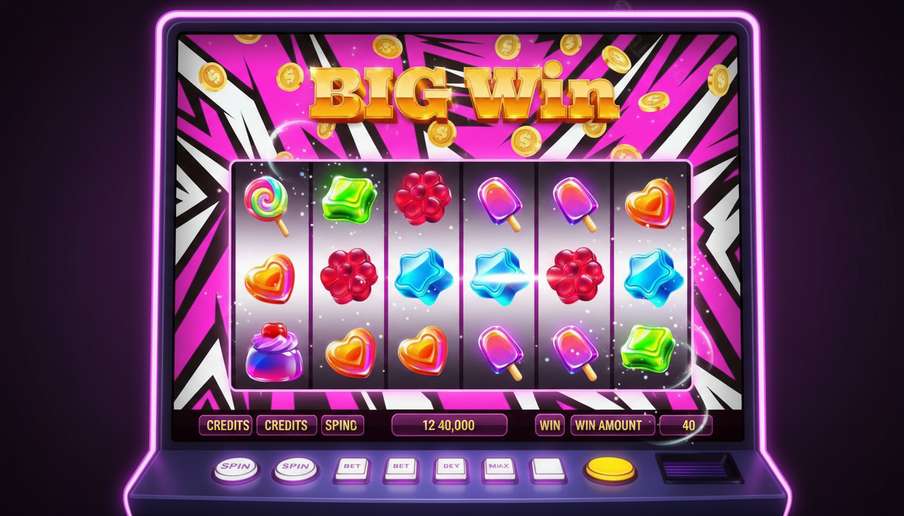
Casino games often use cognitive biases to create a sense of excitement and anticipation. One of the most common cognitive biases used in casino games is the near-miss effect, which is the tendency for players to perceive near-misses as wins. This is because near-misses activate the brain’s reward system, releasing dopamine and creating a sense of excitement and anticipation. Another cognitive bias used in casino games is the use of losses disguised as wins (LDWs), which are losses that are disguised as wins through the use of celebratory sounds and graphics.
The “Near-Miss” Effect: Why Losing by One Symbol Feels Like Winning
The near-miss effect is a powerful cognitive bias that is used in many casino games. By creating a sense of anticipation and excitement, near-misses can motivate players to continue playing, even when they are losing. This is because the brain is wired to respond to rewards, and the near-miss effect creates a sense of anticipation and excitement that is similar to a win.
Environmental Psychology: The Architecture of the Casino Floor
The architecture of the casino floor is designed to create a sense of excitement and anticipation. The use of bright lights, loud music, and crowded tables all contribute to a sense of energy and excitement. The casino floor is also designed to be disorienting, with no clocks or windows to create a sense of timelessness. This is done to keep players engaged and motivated, and to prevent them from leaving the casino.
The “Labyrinth” vs. “Playground” Design Philosophy
The design of the casino floor has evolved over time, from a labyrinthine design to a more open and welcoming design. The labyrinthine design was used to create a sense of disorientation and confusion, making it difficult for players to find their way out of the casino. The more open and welcoming design, on the other hand, is designed to create a sense of comfort and relaxation, making players feel more at ease and willing to stay longer.
Ethical Considerations and Responsible Game Design
The use of psychological mechanics and cognitive biases in casino games raises ethical concerns about responsible game design. Casinos have a responsibility to ensure that their games are fair and transparent, and that players are not being exploited. This includes providing clear information about the odds of winning, and ensuring that players are not being misled by misleading advertising or promotions.
Author
Dr. Marcus Sterling is a behavioral psychologist and consultant with over 15 years of experience studying consumer habits and gamification. He has published numerous papers on the intersection of neurobiology and digital entertainment, focusing on how environmental stimuli influence decision-making.
FAQ
What is “Losses Disguised as Wins” (LDWs)?
LDWs are losses that are disguised as wins through the use of celebratory sounds and graphics. This is a cognitive bias that is used in many casino games to create a sense of excitement and anticipation.
Why do slot machines use “near-misses” so frequently?
Slot machines use near-misses to create a sense of anticipation and excitement. Near-misses activate the brain’s reward system, releasing dopamine and creating a sense of excitement and anticipation.
How do casinos use sound to encourage more betting?
Casinos use sound to create a sense of excitement and anticipation. The use of winning jingles and celebratory sounds can create a sense of euphoria and excitement, motivating players to continue betting.
Is the “Gambler’s Fallacy” a result of game design?
The gambler’s fallacy is a cognitive bias that is often exploited by game design. The use of history boards and other design elements can create a sense of anticipation and excitement, leading players to believe that a particular outcome is more likely to occur.
Why are there no windows or clocks in most casinos?
There are no windows or clocks in most casinos to create a sense of timelessness. This is done to keep players engaged and motivated, and to prevent them from leaving the casino.